

The angels are back, but is their show better than ever?
The Victoria’s Secret Fashion Show has been one of the most outgoing and intriguing events in the fashion industry. But this year’s show is not the same as it was before, and this is definitely to its benefit.
The story behind Victoria’s Secret is quite simple. The founders, Roy and Gaye Raymond, created a lingerie-only store and a place where people could shop without feeling awkward. But this company has not always been so controversial.
In 2019, Victoria’s Secret cancelled its fashion show due to the hatred they were receiving about model exclusivity. But the controversy about Victoria’s Secret began in the early 2010s.
According to The Style Historian, Ed Razek, the Victoria’s Secret Chief Marketing Officer, had made some controversial comments about whether or not to include transgender and plus-size models on the runway. Razek did not see this as a problem, because their fashion shows are supposed to be a fantasy that idealizes the view of “perfect” bodies.
The first Victoria’s Secret runway show dates back to 1995, when it ws held at New York City’s City Plaza Hotel. Before their iconic wings, Victoria’s Secret kept it lingerie-only, featuring an elegant but comfortable look. During this time, the height of 1990s supermodel culture became more and more popular for its effortless glow. But this glow was probably just because they were exclusively hiring “skinny” lingerie models.
Over time, we have normalized the idea of being thinner, and people are now fed up with seeing unrealistic body standards in the media. The most iconic models of that time have become widely fantasized while carrying dark truths. However, this year’s fashion show falls into a different category.
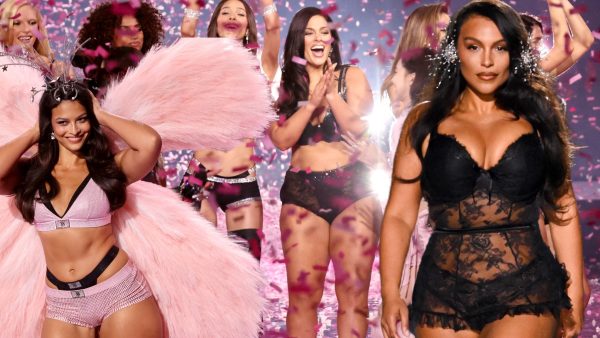 The Victoria’s Secret Fashion Show has shifted into becoming a more inclusive group, including models like Alex Consani and Paloma Elsesser—both winners of the Model of the Year award—alongside angel veterans, including Adriana Lima, Kate Moss, Tyra Banks, and the Hadid sisters.
The inclusion of these new models has brought inclusivity and diversity to the Victoria’s Secret brand, embracing modern values. As truly stated in Teen Vogue, these models are “pushing beyond the bad publicity.”
Despite the hate the company has received, whether it’d be from their rebranding or from their previous beauty standards, people will not be pleased with anything until they get what they want. So by at least giving inclusivity a chance, there is a potential for growth and healing to what has come to our society. By looking at the return of the fashion show as an example, maybe we can all start accepting a better future.
Victoria’s Secret has come to accept a newer and better look for their rebrand, and I’m here for it. We are all uniquely beautiful!
If you’re interested in watching the Victoria’s Secret Fashion Show, you can find it now on Amazon Prime Video.