




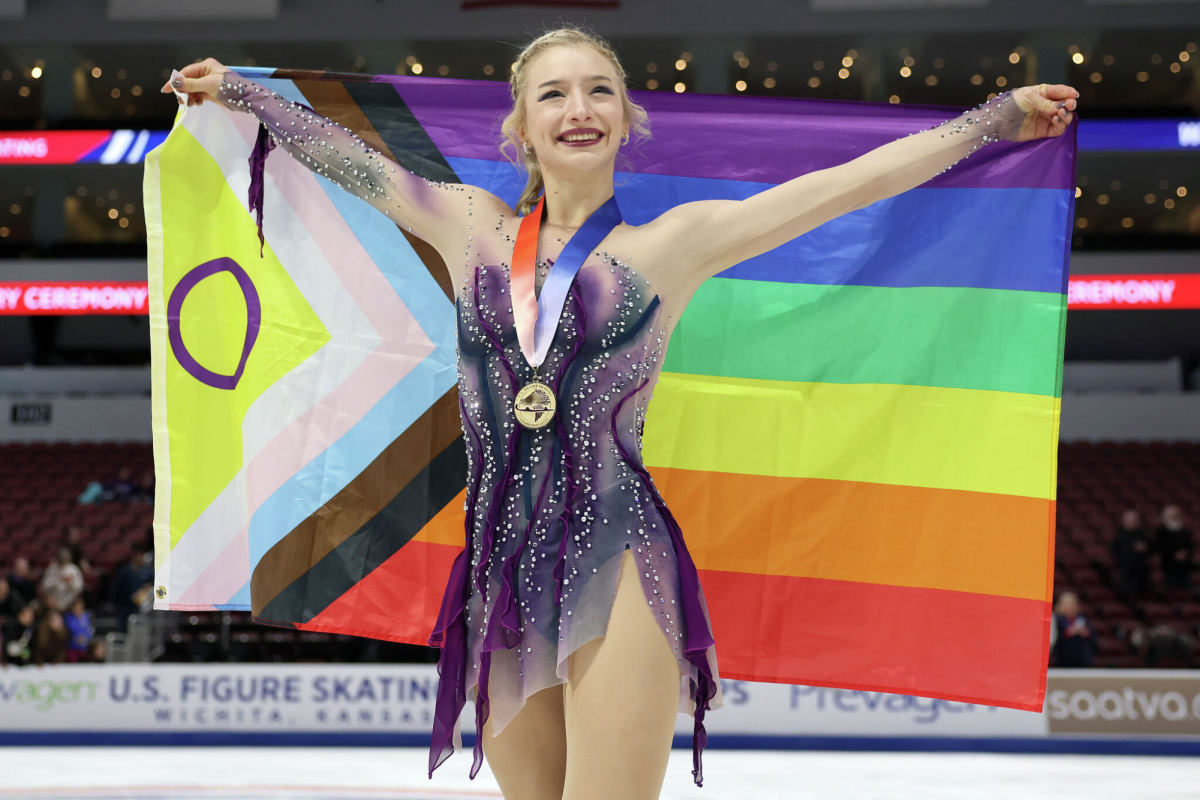
Since the birth of this meticulous Olympic sport, figure skating has had strict rules for its competitors. For a long time, these controversial restrictions seemed to stifle artistic creativity, and the stereotype of the “perfect Olympian” hid the faces of diverse athletes. With all of the conformative pressure that comes from the media today, it seems like it’s harder than ever to express individualism without receiving a backlash.
However, one US figure skating Olympian defies all bounds. Stigma-breaking champion Amber Glenn truly represents the changes that are happening in the figure skating realm. What was once a narrow bud closed off to diversity is now blooming towards a future of inclusivity.
 Amber Glenn, the 26-year-old Olympian and gold-medal champion, has made history as the first openly LGBTQ+ athlete to compete in women’s figure skating at the Winter Olympics. Glenn started skating at just five years old. As she was ushered into the world of figure skating, and won the US junior championships at age fourteen, the pressure weighed on her. Because of this, she took a break from competing in 2015 to receive treatment in a mental health facility, where she worked through anxiety, depression and an eating disorder.
During this break, Glenn was able to receive the help that she needed and reflect on her dedication to skating. “I knew that there was no way I could go back to the way I was doing things,” she said in an interview with TODAY, “and eventually I got to a place to where I was doing things in a healthy way, and I could speak about my struggles.”
This sparked Glenn’s commitment to maintaining authenticity, especially in a sport where most struggles are hidden away. “Mental health in elite sports is something that has become more of a topic over the years, but still is not talked about enough in my opinion,” she claimed.
After her break from the limelight, Glenn returned to competition with a fresh approach. Moved to skate as her authentic self, she publicly came out in 2019 during an interview with Dallas Voice. Despite her anxiety about the public’s opinion, she went on to compete in the 2020 U.S. figure skating championships.
As she approached the ice, Glenn was greeted with numerous pride flags in the audience from supporters who felt touched by her bravery. “People were cheering louder than ever,” she said. “I almost started crying before I even skated. It was one of the most emotional performances of my life. I felt so free.” Many people who have followed Glenn’s journey have shared stories of feeling inspired to be themselves because of her pride.
 In her TODAY interview, Glenn shared, “The stories I’ve been told, that something I did, something I said, and being who I am publicly, unapologetically, has helped them feel better, that outweighs any sort of backlash or anything that could ever come negatively from be being who I am. It’s one of the reasons why I kept skating even when I might not have been seeing the results I wanted.”
During the past two Olympic seasons, Glenn has made a point to show unapologetic pride for who she truly is. “Eventually, I realized, if I’m gonna keep doing this, I want to at least do it as me,” she told The Athletic. “I’m going to be at the top anyway, so I might as well do it as myself. And in doing so, I ended up making it to the top.”
Glenn has utilized her growing platform to be a voice for LGBTQ+ rights. When asked by reporters about the Trump Administration’s approach to the LGBTQ+ community, she said, “It’s been a hard time overall for the community under this administration. This isn’t the first time that we’ve had to come together as a community and try to fight for our human rights…I hope I can use my platform and my voice throughout these games to try to encourage people to stay strong in these hard times.” This response in particular, led to an influx of hatred directed towards her.
While many have felt heard and supported by Glenn’s statement, others are angry. Some responders said they have lost their desire to watch the Olympics, due to the increase of political takes from athletes. They feel that “sports are supposed to be apolitical.”
As a result of this outrage, people began to send hurtful comments, and even threats, to Amber Glenn. After her performance in the free skate on February 8th, she said she has “never had so many people wish me harm before.” And she added, “That was really disappointing, and I do think it kind of lowered that excitement for this.”
 In further a response on February 7th, Glenn posted on her Instagram story, “When I chose to utilize one of the amazing things about the United States of America (Freedom of speech) to convey how I feel as an athlete competing for Team USA in a troubling time for many Americans, I am now receiving a scary amount of hate/threats for simply using my voice WHEN ASKED about how I feel. I did anticipate this but I am disappointed by it. I will be limiting my time on social media for my own wellbeing for now but I will never stop using my voice for what I truly believe in.”
With the increase of virality in all realms of the internet, using an influential platform to speak out on one’s values is a powerful move that many are choosing to take. Many, like Glenn, experience significant backlash for utilizing their free speech. But she is choosing to continue her activism and stand above the hateful responses.
Using the spotlight to spread awareness for pressing issues is brave and vital for spreading awareness. Glenn is not only an outstanding athlete, but also a changemaker. Her duality of Olympic prowess and peer advocacy is no easy feat.
